Atlantic Africa’s Fisheries Bodies Reunite in Tangier to Revive the “Agadir Model” and Chart a New Course for Sustainable Ocean Governance

Share
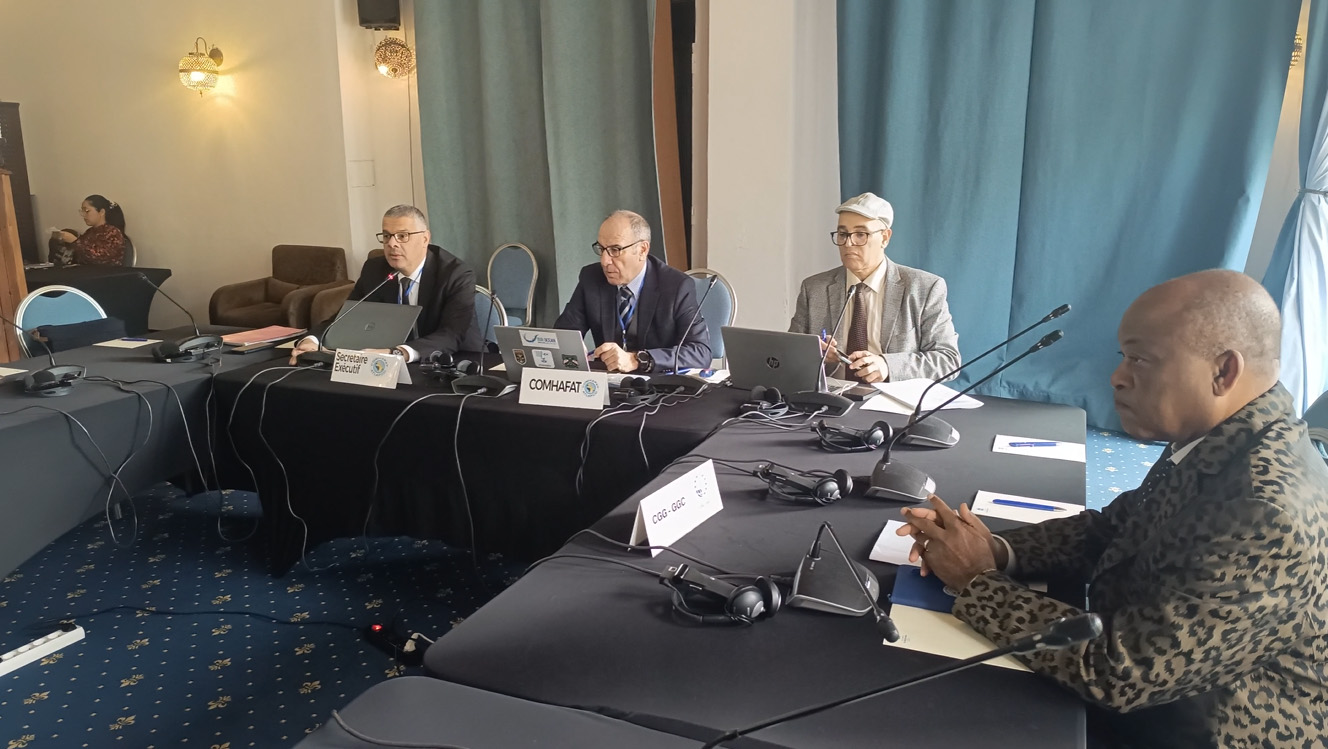
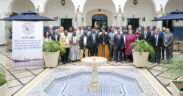
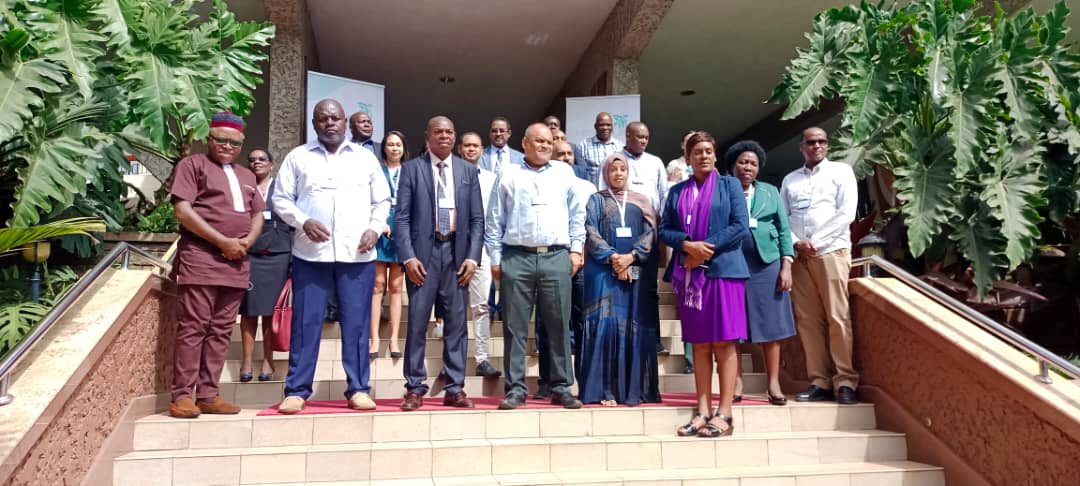
On the margins of the Blue Ports workshop, the Moroccan port city of Tangier hosted a decisive coordination meeting convened by COMHAFAT/ATLAFCO. Major regional fisheries organisations operating along Africa’s Atlantic seaboard gathered to take stock of the partnership framework forged in Agadir in 2015 and to agree on a new roadmap for deeper, more operational cooperation — with sustainable marine resource management and effective regional governance squarely at the centre.
Tangier, 7 March 2026 • By Naoufel Haddad, OMPDA/MOSFA
A Room Full of Institutional Memory — and Renewed Urgency
When the key organisations shaping fisheries policy along Africa’s Atlantic coast assembled in Tangier on 7 March 2026, the mood was not one of routine protocol. Under the theme “Promoting Synergies for the Sustainable Use of Living Marine Resources”, the meeting had been called by COMHAFAT/ATLAFCO to do two things at once: honestly assess what a decade of institutional cooperation had and had not achieved, and agree on a sharper, more operational path forward. Both tasks were accomplished.
Around the table sat the representatives of organisations whose combined mandate covers fisheries governance, data, trade and artisanal fishing across most of the African Atlantic: the CPCO, the COREP, INFOPÊCHE, the ADEPA and the REPAO , the same institutions that had signed a landmark Memorandum of Understanding in Agadir on 22 February 2015, establishing the cooperative framework now under review. A decade on, it was time to measure the distance between the declaration and the delivery.
The Agadir MOU: A Promising Foundation Under Strain
The 2015 Agadir Memorandum of Understanding was, by any measure, an ambitious act of institutional architecture. For the first time, the principal regional fisheries organisations operating on the Atlantic seaboard , spanning from Morocco and Mauritania to the Gulf of Guinea , formalised a framework for coordinated action. COMHAFAT took on the role of central coordinator, organising regular consultations and channelling technical and financial support to partner organisations on three priority fronts: combating illegal, unreported and unregulated (IUU) fishing, managing shared fish stocks across national boundaries, and improving market access for fisheries products from the region.
The Agadir framework also incorporated a parallel partnership , through ADEPA , dedicated specifically to artisanal fishing, recognising that the millions of small-scale fishers scattered along the Atlantic coast operate in a fundamentally different economic and governance reality from their industrial counterparts, and that any credible regional cooperation must serve them too.
Taking Stock: Progress Made, Gaps That Remain
The Tangier meeting did not flinch from candour. Delegates acknowledged that while the 2015 framework had generated measurable progress , in particular in technical exchanges and joint positions on IUU fishing , the cooperation had not yet reached the operational depth its founders envisioned. Two structural weaknesses surfaced repeatedly in the discussions.
The first was institutional fragmentation: too many organisations working on overlapping mandates, sometimes in parallel rather than in concert, consuming scarce resources and diluting collective impact. The second was a gap between ambition and implementation , the regional programme existed on paper, but lacked the clear mechanisms, shared indicators and funded workplans needed to translate strategic commitments into concrete, measurable outcomes on the water and in fishing communities.
The consensus was clear: without a deliberate effort to pool resources, align agendas and build genuine institutional complementarity, the sum of the region’s fisheries organisations would continue to fall short of their combined potential.
Partners Reaffirm Their Commitment , With a Harder Edge
The representatives of CPCO, COREP, INFOPÊCHE and ADEPA did not merely restate goodwill. They came with a sharper proposition: that the next phase of cooperation must be built on genuine resource pooling , shared data systems, coordinated monitoring and joint positions in international negotiations , and on a strengthened regional governance architecture that gives the partnership real teeth. The language in the room had shifted noticeably from the diplomatic optimism of 2015 to the practical impatience of institutions that have learned, from hard experience, what cooperation actually requires.
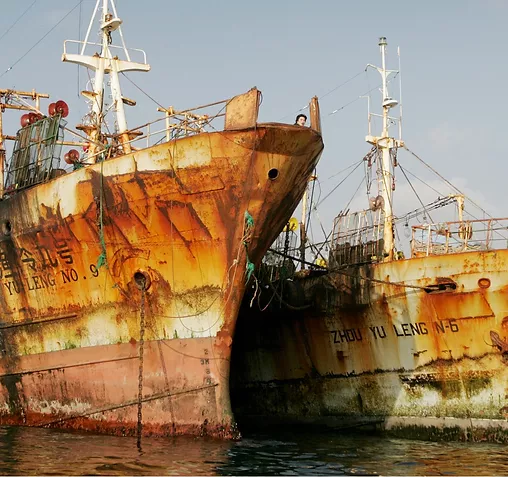
The emphasis on avoiding duplication was particularly pointed. At a time when African fisheries face mounting pressures , from climate change and stock depletion to illegal fishing by distant-water fleets , the region cannot afford the luxury of organisations talking past one another. Alignment is not a bureaucratic nicety; it is, increasingly, an operational necessity.
Amplifying the Message: The Role of Strategic Communication
Among the voices around the table, one carried a distinct mandate. Mr Naoufel Haddad, Secretary-General of the Observatory of Media for Sustainable Fisheries and Blue Economy (OMPDA/MOSFA), attending as COMHAFAT’s official media partner, made a case that deserves to be heard beyond the conference room: that the governance gap in African fisheries is inseparable from a communication gap.
Too many well-designed regional policies, he argued, fail to reach the fishers, the traders, the local officials and the citizens whose behaviour they are meant to shape , because the communication architecture is either absent or inadequate. Strengthening strategic communication around regional initiatives, raising the visibility of African fisheries policies at continental and global level, and building a robust ecosystem of specialised information on sustainable fishing and the blue economy are not optional add-ons. They are integral to governance. A regional programme that no one knows about changes nothing.
A Roadmap Adopted , The “Agadir Model” Relaunched
The Tangier meeting concluded with what its participants described as a genuine deliverable: the adoption of a joint roadmap to develop a common regional programme. The document is more than a communiqué. It sets out a structured process for translating the broad commitments of the 2015 MOU into a funded, monitored and time-bound plan of action, with clear responsibilities assigned to each partner organisation.
Delegates spoke deliberately of a relaunch of the “Agadir Model” , invoking the 2015 Memorandum not as a historical relic but as a living framework whose original ambition had not yet been matched by its implementation. The Tangier roadmap is an explicit attempt to close that gap: to move from a coordination framework that exists in principle to a regional governance architecture that delivers in practice.
For COMHAFAT Executive Secretary Mr Taoufik El Ktiri, the message was one of institutional confidence. The diversity of organisations in the room , each with its own constituency, mandate and institutional culture , had converged on a shared diagnosis and a shared way forward. That, in itself, was the meeting’s most significant outcome: not a document, but a collective decision to act together.
Looking Ahead: From Coordination to Integration
The Tangier coordination meeting closes a chapter and opens another. After ten years of building the architecture of regional cooperation, the organisations of Atlantic Africa’s fisheries sector have agreed that the architecture is not enough. What the region needs now is a living institution , one that pools knowledge, aligns action, speaks with a coherent voice in international forums, and places the sustainable management of shared marine resources above institutional self-interest.
The fish stocks of the Atlantic do not respect national boundaries or organisational mandates. Whether the “Agadir Model” can be relaunched with the operational rigour its architects originally intended will depend, in the months and years ahead, on whether the political commitments made in Tangier are matched by the technical, financial and communicational follow-through that sustained regional governance demands.
COMHAFAT/ATLAFCO (Ministerial Conference on Fisheries Cooperation among African States Bordering the Atlantic Ocean) coordinates fisheries governance across 22 Atlantic African member states. The Agadir MOU (2015) established a formal partnership framework with CPCO, COREP, CSRP, INFOPÊCHE, REPAO and ADEPA. OMPDA/MOSFA is the Observatory of Media for Sustainable Fisheries and Blue Economy, serving as COMHAFAT’s official media partner.
Naoufel Haddad