FISHERIES AND AQUACULTURE IN AFRICA: THE TIME FOR DECISIVE REFORMS HAS COME

Share
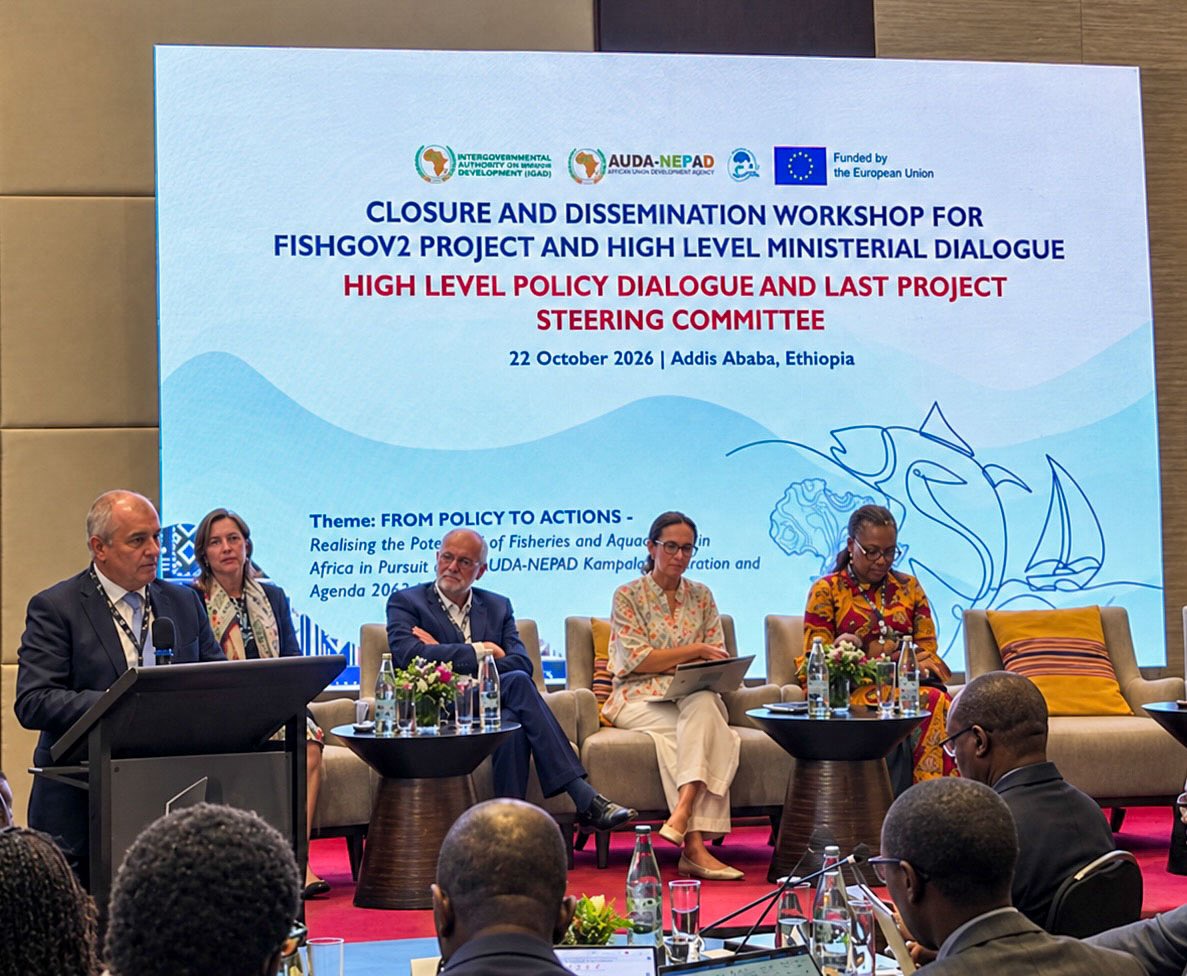
At the close of the FishGov2 project in Addis Ababa, discussions on fisheries governance, sustaining achievements, and improving the livelihoods of fishing communities take centre stage once again.
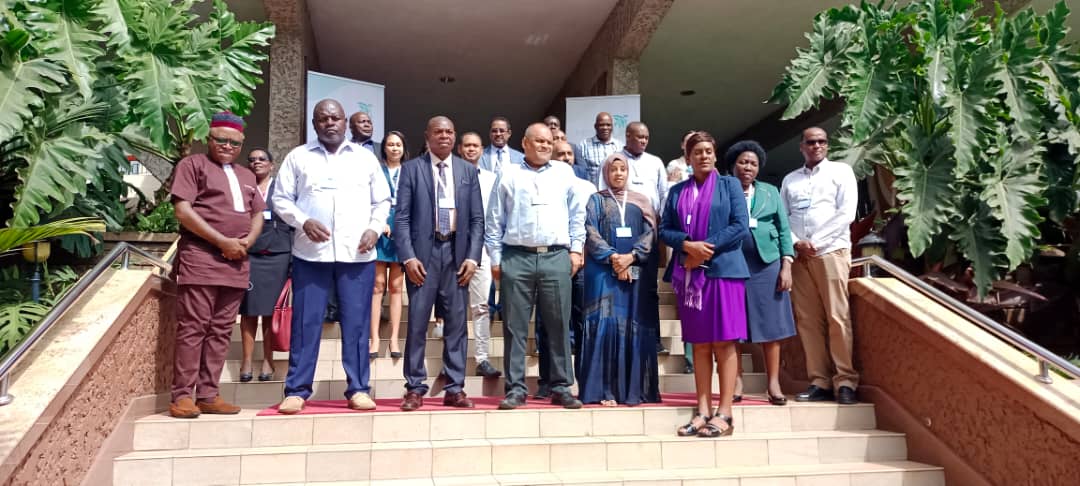
Africa is seeking to take a new step forward in transforming its fisheries and aquaculture sector. Meeting on 22 October in Addis Ababa, Ethiopia, for a high-level ministerial dialogue and the final Steering Committee meeting of the FishGov2 project, government officials, continental institutions, and technical and financial partners reviewed the progress of reforms undertaken and explored ways to ensure their long-term sustainability.
At the heart of the discussions was the need to strengthen governance mechanisms, improve the sustainable management of fisheries resources, and turn fisheries and aquaculture into genuine drivers of food security, wealth creation, and socioeconomic development.
Ghana Sounds the Alarm: Abundant Resources, Yet Fishing Communities Remain Poor
One of the most striking interventions during the ministerial dialogue came from Ghana’s Minister for Fisheries and Aquaculture, Her Excellency Emelia Arthur, who drew attention to the paradox between the sector’s economic potential and the persistent poverty affecting the communities that depend on it.
“While the communities that sustain this sector remain poor, this reality calls for a fundamental shift in the priority we give to fisheries and aquaculture within our national and continental development agendas,” she stated.
Her remarks brought the social impact of sectoral reforms back to the forefront of public policy discussions.
Beyond resource conservation and improved economic performance, the transformation of the sector must also lead to tangible improvements in incomes, livelihoods, and living conditions for coastal and inland fishing communities.
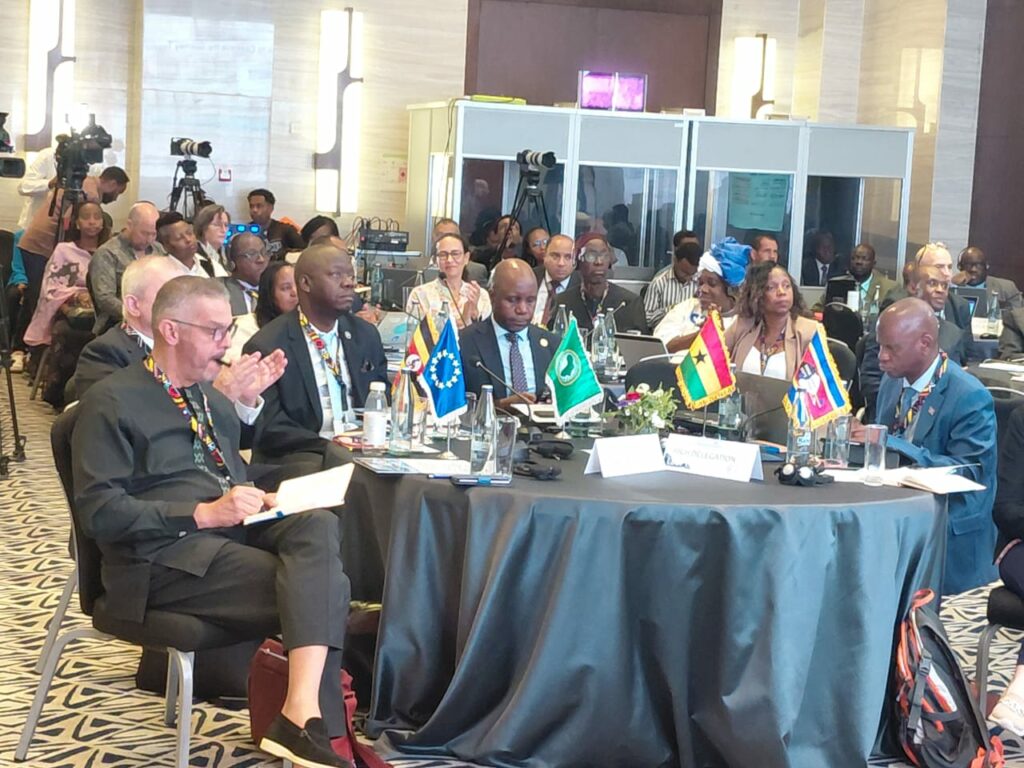
FishGov2: Building on Achievements to Strengthen Governance
Funded by the European Union, the FishGov2 project, which focuses on improving sustainable fisheries management and aquaculture development in Africa, forms part of a broader effort to accelerate reforms across the sector.
The final Steering Committee meeting was devoted to reviewing achievements, good practices, lessons learned, and challenges encountered throughout the project’s implementation.
The discussions brought together key institutions, including the African Union Inter-African Bureau for Animal Resources (AU-IBAR), the African Union Development Agency (AUDA-NEPAD), and the World Organisation for Animal Health (WOAH).
The central objective of this assessment was to promote institutional ownership of the project’s achievements and facilitate their integration into national and regional fisheries and aquaculture governance frameworks.
Another priority was to identify mechanisms capable of ensuring the continuity of interventions beyond the project’s funding cycle.
A Ministerial Dialogue to Accelerate Sector Transformation
The high-level dialogue focused on continental strategic priorities, particularly the Kampala Declaration, the Comprehensive Africa Agriculture Development Programme (CAADP), and the African Union’s Agenda 2063.
The presentation of a ten-year transformation programme for resilient and sustainable fisheries and aquaculture also featured prominently in the discussions.
This approach reflects a determination to establish stronger links between continental political commitments and national planning instruments, regulatory frameworks, and operational implementation mechanisms.
The objective is to move beyond policy declarations and ensure that continental ambitions translate into effective action at national and local levels.
Sustaining the Gains: The Post-FishGov2 Challenge
Beyond the technical assessment, the final Steering Committee meeting placed particular emphasis on the project’s exit strategy and the long-term sustainability of its interventions.
The conclusion of FishGov2 therefore marks the beginning of a new phase in fisheries and aquaculture governance across Africa.
The challenge is no longer simply to formulate ambitious policies, but to translate them into concrete, measurable, and sustainable actions.
At a time when fisheries resources play a vital role in food security, employment, and local economies, improved governance must also respond to the expectations of the communities whose livelihoods depend directly on these activities.
In this context, the message delivered by Ghana’s Minister for Fisheries and Aquaculture takes on its full significance:
The success of reforms cannot be measured solely by the institutional frameworks established, but must also be assessed through their tangible benefits for local populations.
Four days after the Addis Ababa meeting, one fundamental question remains: How can the achievements of FishGov2 be transformed into structural changes capable of ensuring sustainable resource exploitation, a competitive aquaculture sector, and more widely shared prosperity?
It is now on this front that the credibility of Africa’s ambitions for fisheries and aquaculture governance will be tested.