Dakar Hosts High-Level Meeting on Aquaculture Development in Africa

Share
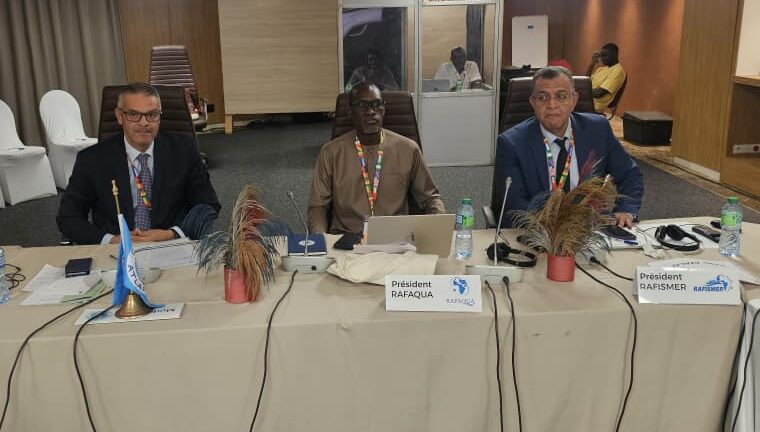
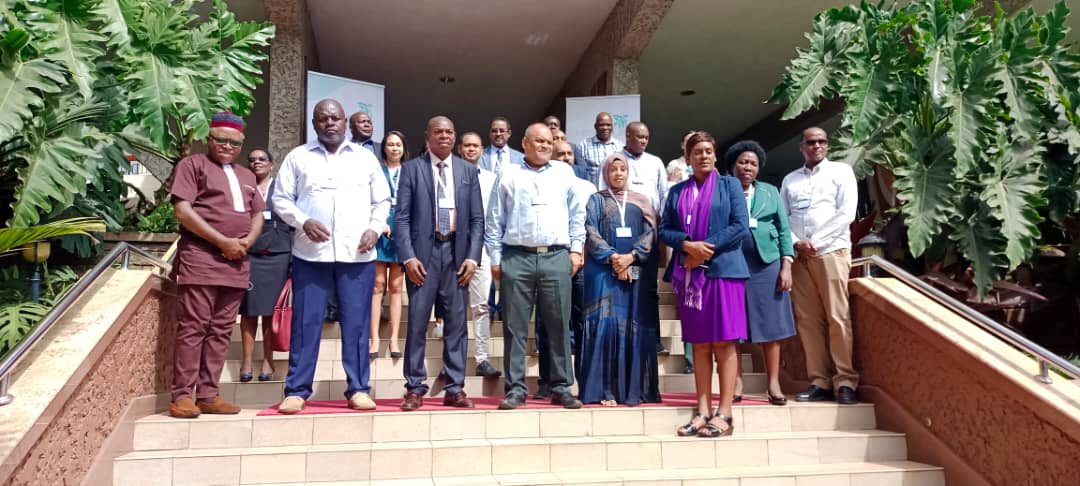
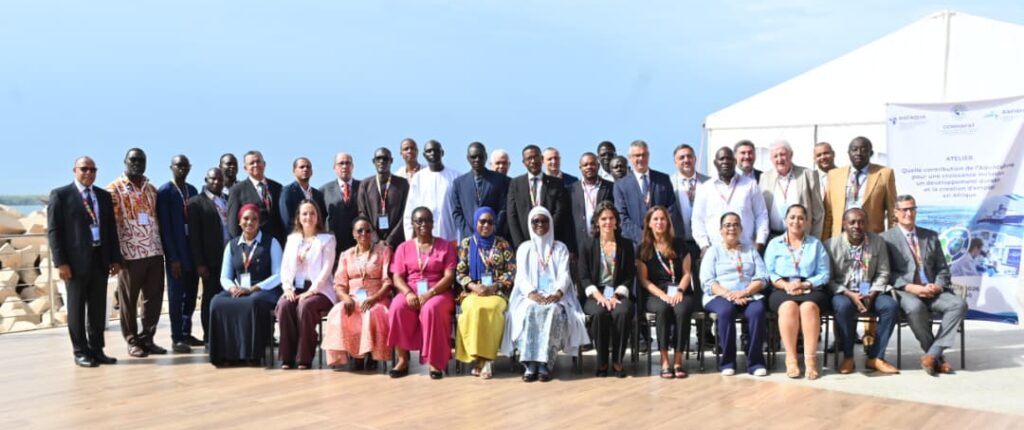
The Senegalese capital, Dakar, hosted a high-level meeting on aquaculture from October 7 to 8, 2026. The event was held under the theme: “What contribution can aquaculture make to inclusive growth, sustainable development, and job creation in Africa?” It was jointly organized by the African Network of Institutions for Aquaculture Development and Promotion (RAFAQUA) and the African Network of Fisheries Research and Marine Science Institutes (RAFISMER)—both under the auspices of COMHAFAT.
Supported by the Ministerial Conference on Fisheries Cooperation among African States Bordering the Atlantic Ocean (COMHAFAT), the workshop brought together representatives from COMHAFAT’s 22 member states, as well as the CSRP, Portugal’s AIR Centre, and the OMPDA. The objective was to share experiences and foster synergy and complementarity among COMHAFAT member states through the RAFAQUA and RAFISMER networks.
COMHAFAT Executive Secretary Mr. Taoufik El Ktiri praised the high quality of the presentations and contributions, noting that they clearly demonstrate the commitment to developing a sustainable, competitive, profitable, and equitable aquaculture sector for Africa.
In his opening remarks, Mr. Baba Ndiaye, Chief of Staff to Senegal’s Minister of Fisheries and the Maritime Economy, welcomed the hosting of this high-level meeting in Senegal. Faced with declining fish catches coupled with rapid population growth, he argued that “aquaculture now emerges as a credible alternative capable of bridging the gap and contributing significantly to achieving food security goals, creating jobs and income, and combating illegal migration.” To this end, he advocated for a necessary transition across Africa from capture fisheries to fish farming.
However, according to Mohamed Najih, President of RAFISMER, “the success of this transition requires breaking away from isolated approaches. We need strong synergy among policymakers, research institutes, the private sector, and our development partners. The State must play its role as a facilitator by securing investments, standardizing production zones, and modernizing supporting infrastructure.” For his part, Mr. Samba Ka, President of RAFAQUA, also called for coordinated action across Africa. “We must work together to find sustainable solutions,” he declared.